Terrier Update: May 2025

We have four dogs now. Sadly, one of our Scotties passed away on April 25, 2025.
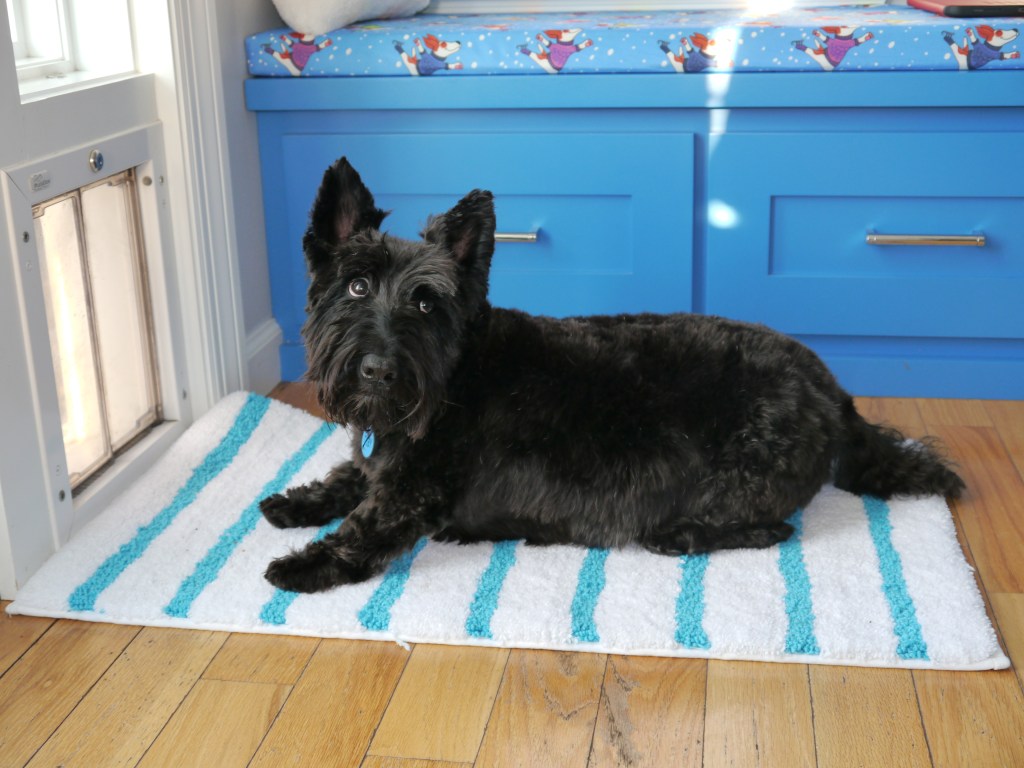
Toby 2015 – 2025

This was Toby, our male Scottish Terrier. He was a bit of a kleptomaniac since he liked to steal shoes, gloves, etc., just to be chased. His other pastime was barking at rabbits and catching sunbeams. He also loved belly rubs, but his dislikes were thunder, fireworks, and going to the vet. His Gotcha Day was October 15, 2015.

This is Tillie, a 10-year-old female Scottish Terrier, and she was Toby’s sister. She is the spokesdog of the pack, and will remind us when it’s mealtime, when to put on their lighted collars, and when the other dogs are getting in trouble. She also serves as my alarm clock in the morning. One of her pastimes is chasing rabbits. Tillie’s Gotcha Day was October 15, 2015.
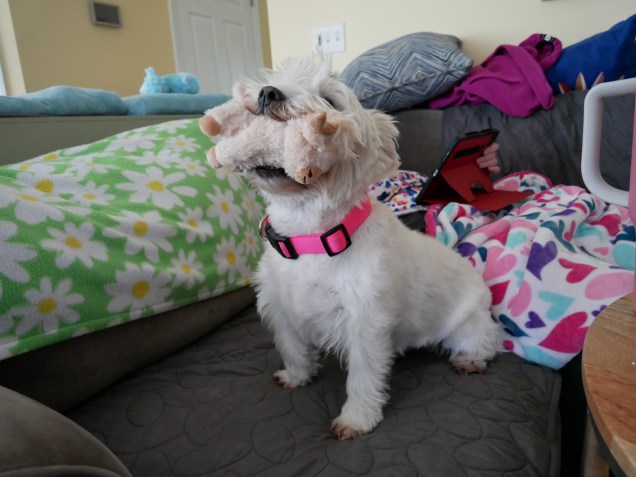
This is Trixie, our female 8-year-old West Highland Terrier. She likes to play tug-of-war and soccer with me. She has the best wigglebutt around and is quite happy most of the time. Right now, she is dealing with being the middle child. Her Gotcha Day was March 3, 2017.
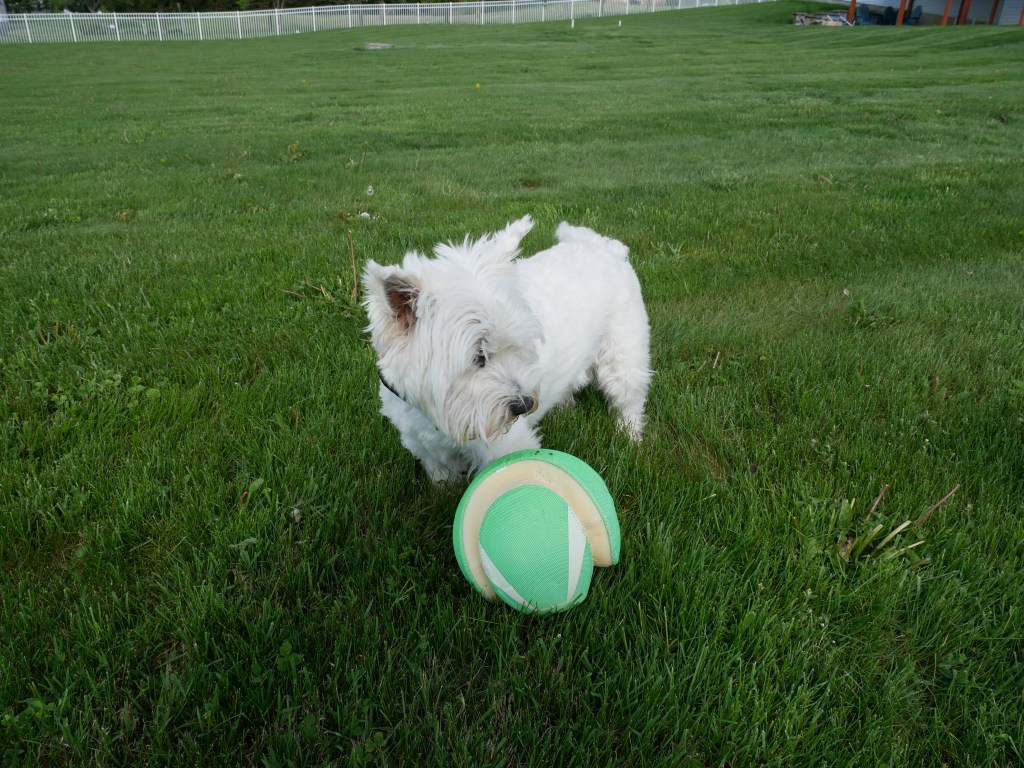
Tripper is now 7 years old, and he has grown up a great deal. He is larger and heavier than his sister, Trixie, but he is still a puppy at heart. He is not a morning dog and is a bit grumpy when he gets up. Even so, his mood remains mercurial but less so as time passes. He loves his ball, chasing it when I kick it, and grabbing my pants leg. His gotcha day was August 17, 2018.
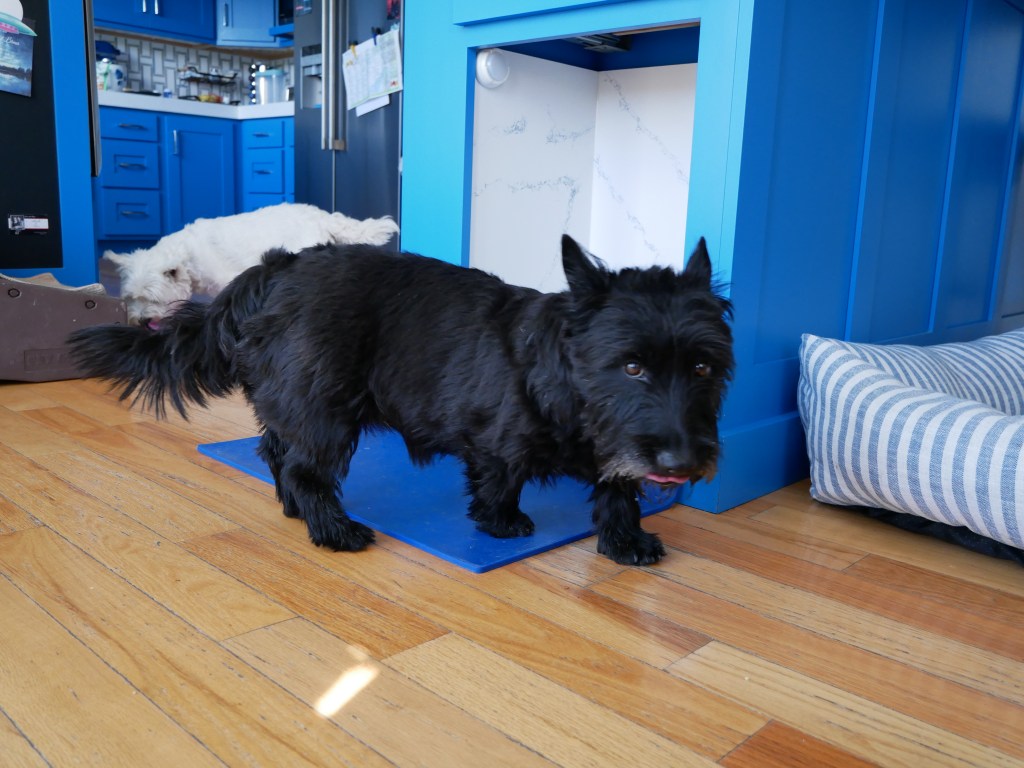
Our youngest member of the pack is Trisha, a female Scottish Terrier. She was rescued from a puppy mill in Ohio, and her gotcha day was December 16, 2021. Her age was not known until we discovered that she already had an ID chip. The chip was scanned, and we found out her birthdate is 12/21/2018. She plays with every toy she encounters, especially if they squeak. She was shy around strangers but has come out of her shell and looks for adventure. She is mischievous, playful, and very active.

After Toby passed, we decided to apply for another rescue Scottish Terrier.

He will be picked up in western Ohio later this month. Following our ‘T’ naming convention, we plan to name him Tinsel. Our hope is that Tinsel will easily integrate with our pack.
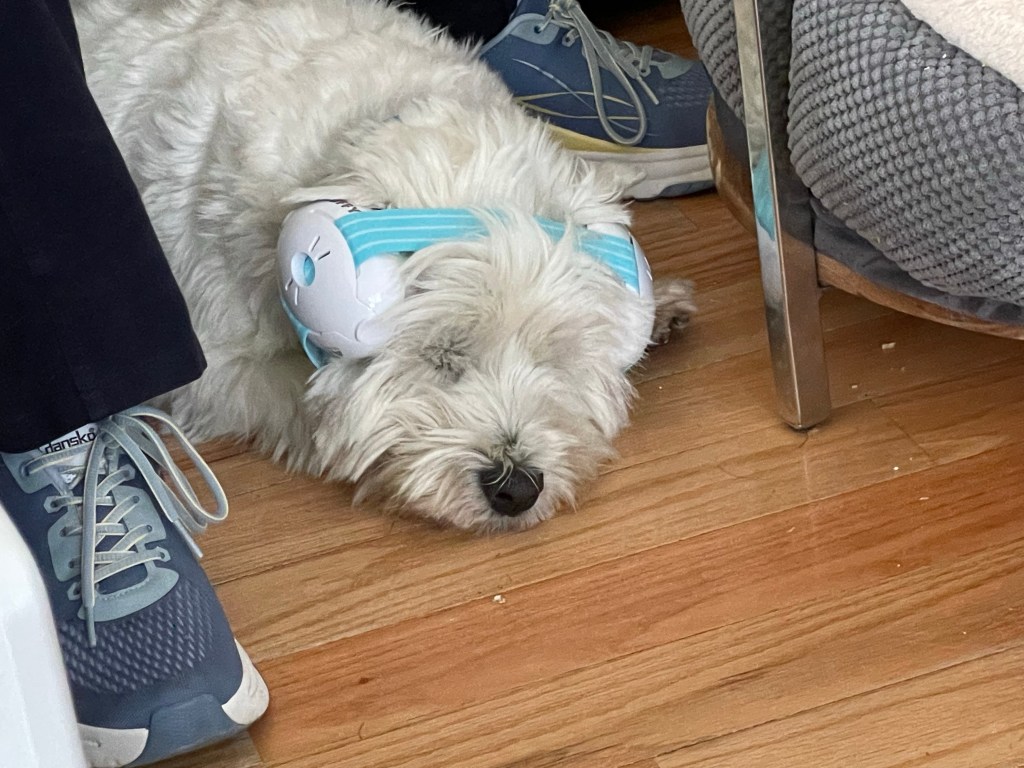
Dog Ear Protection

Some dogs do not react well to the sounds of thunder and fireworks. This is true of our male terriers: Toby a Scottish Terrier, and Tripper, a West Highland Terrier. Tripper also doesn’t like the sounds from the TV during football games. We think it’s the official’s whistles and the crowd noises.

My wife, Marla, decided to try baby ear protectors. She put them on Tripper before a football game (see below), and he napped through some of the game.

Tripper models his ear protection.

Marla got another pair of ear protectors and put them them on Toby and Tripper during a thunderstorm. That seemed to work as well. They both napped during the thunderstorm.

Scotty Cramp

Until yesterday afternoon, my wife and I had not heard of a genetic condition specific to Scottish Terriers. Our Scotties, Toby Two and Tillie, normally very active, became listless after prolonged exercise in our backyard. We immediately took them to the vet and learned about their ailment. 

“Scotty Cramp” is a hereditary neuromuscular disorder characterized by periodic cramps. It is seen in Scottish Terriers, especially those less than one year of age. As we observed, the condition’s appearance was quite startling, an its onset was rapid. However,  it does not usually represent a serious health problem or cause pain.

Episodes of Scottie Cramp typically first manifest in young dogs or puppies. Our Scotties are now 15 months old. Symptoms occur during or shortly after periods of intense excitement, stress, or exercise and may include any of the following:

  • Stiff hind limbs that appear cramped
  • Awkward, marching movements
  • Shortness of breath
  • Sudden collapse
  • Facial muscle contractions
  • Contraction of facial muscles
  • Arching of lumbar spine

An episode of Scottie Cramp can last up to thirty minutes, with varying levels of severity. As we observed, its onset occurred after the stress of moving to a new home and after increased activity. Although it is inherited, some experts believe Scotty Cramp to be the result of a disorder in serotonin metabolism within the dog’s central nervous system.

Unfortunately, there is no specific treatment available at this time. However, behavioral modification and/or environmental changes have been shown and are recommended to eliminate triggers which may cause the onset of symptoms. 

Mild sedatives, such as diazepam, may be useful if behaviors are difficult to modify or in advance of a planned event that may be stressful. Also, Vitamin E is thought to be beneficial in reducing the likelihood of an attack, although it does not appear to impact the severity of the cramping.
After 24 hours of resting and reduced activity, our dogs have returned to their normal active selves.