Spring Arrives in Halfmoon Valley

Happy Easter!

Easter-3Easter-2

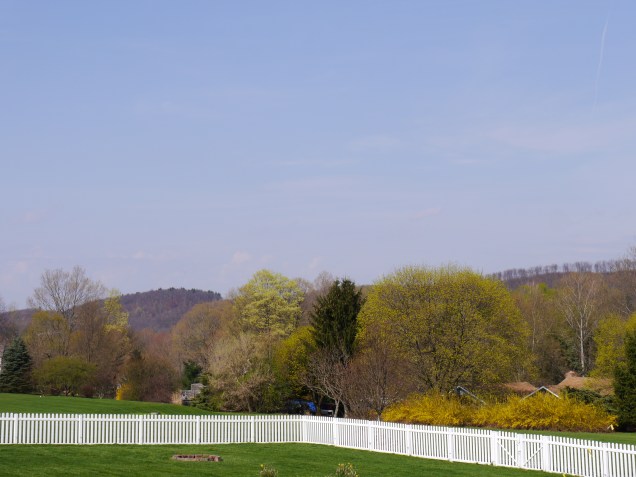
At last, Spring has arrived in Halfmoon Valley. After a long Winter, temperatures have become more moderate with highs in the 60s and 70s. Forsythia are blooming and local apple orchards, Bradford pear, and other deciduous trees are leafing out. Farmers in the valley are plowing and planting their fields.
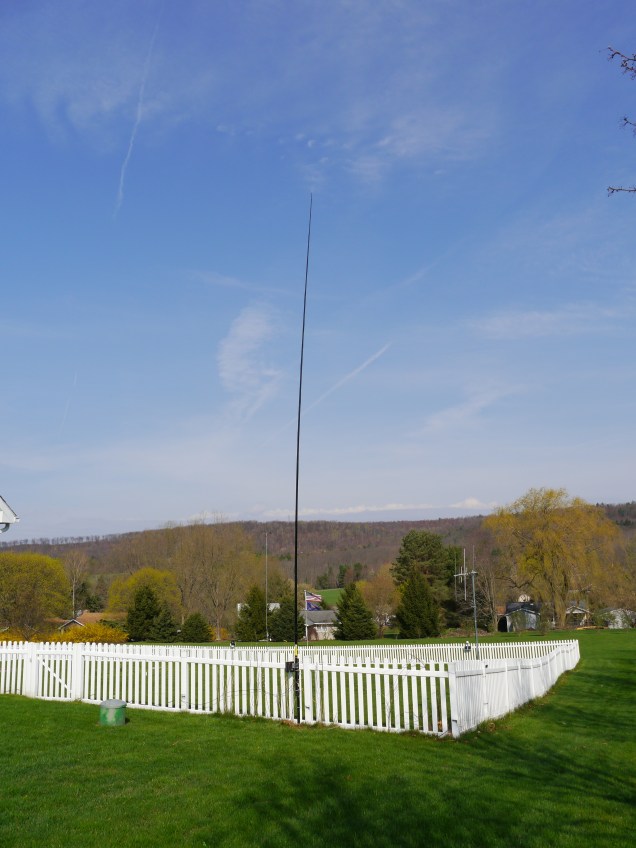
My outdoor activities are becoming more frequent, too. I assembled my wife’s gardening cart, and I installed a vertical HF antenna. My radio shack is now complete.
P1030125

Stormstown Water Board

This week, my wife and I attended the annual meeting of our local water commission. We both found it to be interesting and instructive. 

We learned that our community is supplied by two wells, each with a storage tank. One well has recently been put into production. The board plans to link the two wells and operate them on an alternating schedule.

Some of the older water lines are leaking, and is estimated that the leakage rate is 20%. There is a program to systematically replace the older lines. It is also necessary to plug the boreholes for three abandoned wells.
There hasn’t been a rate increase in nearly 25 years. The system has been operating at a loss over the last few years. In order to improve service, pay for the new well, increase monetary reserves, and cover other operating costs, there will be a rate increase effective this July. The rates are two-tiered.

Stormstown: A Brief History

The village that is now called Stormstown was located on one of the area’s earliest roads. Laid out in 1791-92, the road served as a main route for the shipment of Centre County iron west to Pittsburgh. First settler Abraham Elder’s tavern, on the east end of the village, was a stopping place for iron haulers. In 1812 David Storm recorded a plat of 30 lots, plus a school lot, that he named Walkerville, on the west side of present-day Municipal Lane in the middle of Stormstown. The origin of the Walker connection has not yet been tracked down. Some twenty years after Walkerville was established, Caleb Way slowly started selling off lots between Walkerville and the former site of Elder’ tavern, in an area that was briefly called Wayville. Eventually, by the time of the Civil War, the whole area was called Stormstown. The enterprises of the village included a gristmill, sawmill, distillery, tannery, wagon maker, and several craftsmen’s shops – blacksmith, weaver, potter, and chairmaker.

On April 7, 1867, an Easter fire destroyed twenty-six buildings, many of which were never rebuilt. The fire started in George Matters house and in less than three hours, the entire portion of the town lying between the Port Matilda Road and Capt. Hunter’s residence, 2/3 of Stormstown was destroyed by fire. In addition to these losses, all the stables and outhouses on the south side of the street and east of the road to Pine Grove Mills were destroyed.