First Day of Pyranometer Operation

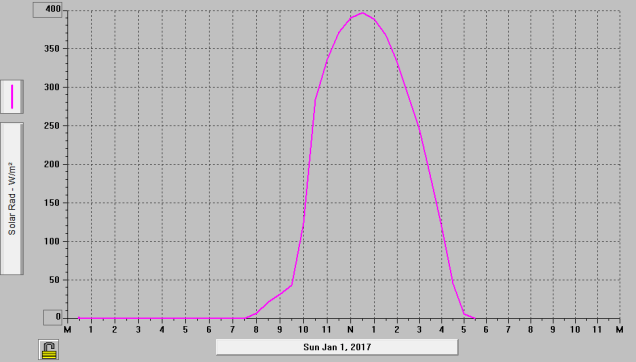
In a previous post, I talked about installing a new pyranometer to my weather station. Below is a graph of today’s solar radiation flux in W/m^2.

solrad

The graph clearly shows when the instrument was in shade (7:30 – 9:30 AM EST). Maximum value was after noon due to the fact that the longitude is about 3 deg west of the 75th meridian and because the equation of time for today is 3 minutes. The maximum solar elevation angle was about 28 deg. The optical depth of the atmosphere is significantly higher at such a low angle than if the sun was at zenith.

2016 Climatological Summary

                            2016 ANNUAL CLIMATOLOGICAL SUMMARY

CITY: Stormstown   STATE: PA  
ELEV:  1385 ft  LAT: 40.8  LONG: 77.87

               TEMPERATURE (°F), HEAT BASE 65.0, COOL BASE 65.0
                          DEP.  HEAT  COOL                                          
        MEAN  MEAN        FROM  DEG   DEG                        MAX  MAX  MIN  
 YR MO  MAX   MIN   MEAN  NORM  DAYS  DAYS  HI  DATE  LOW  DATE  >=90 <=32 <=32 
--------------------------------------------------------------------------------
 16  1  34.3  17.3  25.9   1.3  1211     0  59.4  31   5.0    5    0   12   30 
 16  2  40.0  23.1  31.9   5.1   960     0  65.9  28   0.5   12    0    7   22 
 16  3  56.6  33.6  45.3   8.8   618     8  76.2   9  16.0    3    0    0   14 
 16  4  59.6  35.7  48.4   0.7   522    23  80.9  18  19.3    6    0    0   10 
 16  5  68.8  48.4  58.5  -0.1   273    71  88.6  28  36.6   19    0    0    0 
 16  6  79.1  56.5  68.2   0.9    70   166  87.7  11  43.2   10    0    0    0 
 16  7  86.2  62.0  73.6   2.4    28   295  95.7  25  49.6    3    9    0    0 
 16  8  85.3  62.7  73.2   3.6    24   278  92.7  12  50.8   23    3    0    0 
 16  9  76.9  53.9  65.1   2.9   127   131  89.0  10  39.8   25    0    0    0 
 16 10  63.9  43.4  53.2   2.1   388    22  79.6  18  28.4   26    0    0    3 
 16 11  54.1  34.3  43.9   3.1   636     2  73.6   2  23.2   23    0    0   13 
 16 12  37.6  24.6  31.2   1.4  1047     0  52.1  27   5.9   16    0    7   24 
--------------------------------------------------------------------------------
        61.9  41.4  51.6   2.7  5905   997  95.7 JUL   0.5  FEB   12   26  116 

                                PRECIPITATION (in)

               DEP.   MAX        DAYS OF RAIN 
               FROM   OBS.          OVER
 YR MO  TOTAL  NORM   DAY  DATE .01   .1   1
---------------------------------------------
 16  1  1.58  -0.92  1.12   10    7    2    1
 16  2  2.99   0.29  1.23    3    9    3    1
 16  3  1.92  -1.38  0.55   13   10    6    0
 16  4  1.85  -1.15  0.50   28   12    5    0
 16  5  3.52  -0.28  0.73   21   17   10    0
 16  6  2.12  -2.08  0.60    5   11    8    0
 16  7  1.16  -2.64  0.26   30    8    7    0
 16  8  5.61   2.31  3.47   10   11    8    1
 16  9  3.49   0.09  1.41   29   10    7    1
 16 10  6.95   4.05  3.62   20   13    7    2
 16 11  1.22  -2.18  0.62   30    5    3    0
 16 12  2.07  -0.73  0.76   18   12    4    0
---------------------------------------------
       34.48 -4.62  3.62  OCT  125   70    6

                                WIND SPEED (mph)
                          DOM
 YR MO   AVG.  HI   DATE  DIR
---------------------------------
 16  1   4.7  42.0   10     W
 16  2   4.5  38.0   25    SW
 16  3   4.1  54.0   28    SE
 16  4   4.0  43.0    3    NW
 16  5   2.7  34.0    8    SW
 16  6   2.9  34.0   12    SW
 16  7   2.5  26.0   15    SW
 16  8   2.2  35.0   16     S
 16  9   2.1  24.0    8    NE
 16 10   2.9  49.0   20   WNW
 16 11   3.9  41.0   20     W
 16 12   5.4  34.0   12     W
---------------------------------
         3.5  54.0  MAR    W

Pyranometer

Today, I installed a new weather instrument, for 2017 and beyond, to my personal weather station (PWS). I installed a pyranometer to measure the solar radiation flux density (W/m**2). The data from the instrument will be sampled every 30 minutes, along with the other parameters that are already being logged.

I have been told that the State College region is cloudier than most. Now I can measure just how “gray” the environment is here.

Scotty Alarm Clock

tillie
Tillie

Since I retired, and except for mornings when I have an early appointment, I have rarely used my alarm clock. Instead, one of our Scottish Terriers, Tillie, provides me with a wakeup bark. Usually, between 6:30 and 7:00 AM, she’ll let me know it’s time to get up. She’ll also get more insistent if I ignore her, or if she feels that I am taking too long. Then she’ll whimper in a classic appeal to emotion. Then it’s time for our morning walk and breakfast.

Scotty Cramp

Until yesterday afternoon, my wife and I had not heard of a genetic condition specific to Scottish Terriers. Our Scotties, Toby Two and Tillie, normally very active, became listless after prolonged exercise in our backyard. We immediately took them to the vet and learned about their ailment. 

“Scotty Cramp” is a hereditary neuromuscular disorder characterized by periodic cramps. It is seen in Scottish Terriers, especially those less than one year of age. As we observed, the condition’s appearance was quite startling, an its onset was rapid. However,  it does not usually represent a serious health problem or cause pain.

Episodes of Scottie Cramp typically first manifest in young dogs or puppies. Our Scotties are now 15 months old. Symptoms occur during or shortly after periods of intense excitement, stress, or exercise and may include any of the following:

  • Stiff hind limbs that appear cramped
  • Awkward, marching movements
  • Shortness of breath
  • Sudden collapse
  • Facial muscle contractions
  • Contraction of facial muscles
  • Arching of lumbar spine

An episode of Scottie Cramp can last up to thirty minutes, with varying levels of severity. As we observed, its onset occurred after the stress of moving to a new home and after increased activity. Although it is inherited, some experts believe Scotty Cramp to be the result of a disorder in serotonin metabolism within the dog’s central nervous system.

Unfortunately, there is no specific treatment available at this time. However, behavioral modification and/or environmental changes have been shown and are recommended to eliminate triggers which may cause the onset of symptoms. 

Mild sedatives, such as diazepam, may be useful if behaviors are difficult to modify or in advance of a planned event that may be stressful. Also, Vitamin E is thought to be beneficial in reducing the likelihood of an attack, although it does not appear to impact the severity of the cramping.
After 24 hours of resting and reduced activity, our dogs have returned to their normal active selves.
Indian Summer

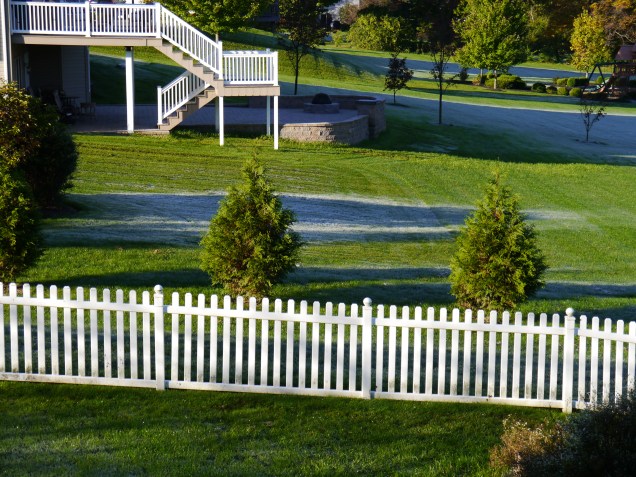
Some would say that our area is now in the midst of Indian Summer (is that politically correct?). Yesterday morning, the temperature in Stormstown fell just below 32 deg F (31.6 F at 6:00 AM EDT), the first recorded freezing temperature of the season. There was frost on the lawns as seen below:

p1020884

As the sun rose, the frost that was in full sunlight dissipated, while the frost in shadow remained.

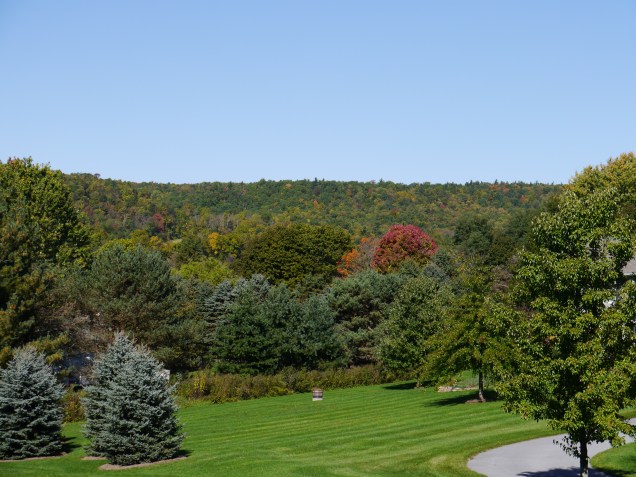
The foliage has some color. However, it is not expected to be spectacular this year as the region has suffered a drought over the summer.

p1020879

It is definitely jacket weather here, nonetheless.

Tropical Storm Matthew

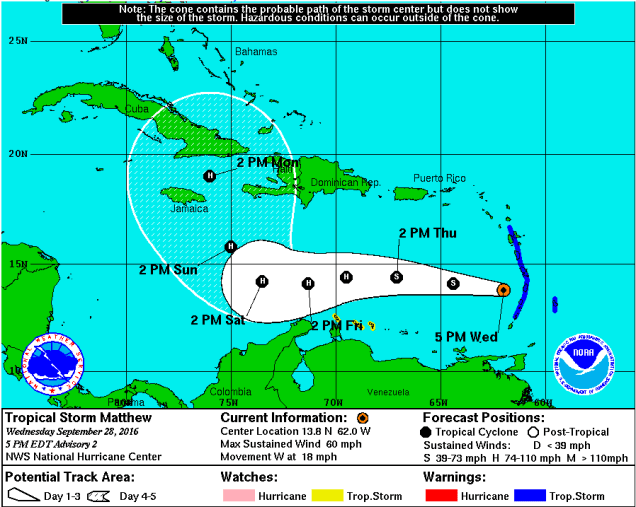
Tropical Storm Matthew formed today. It is forecast to become a hurricane this Friday.

matthew1

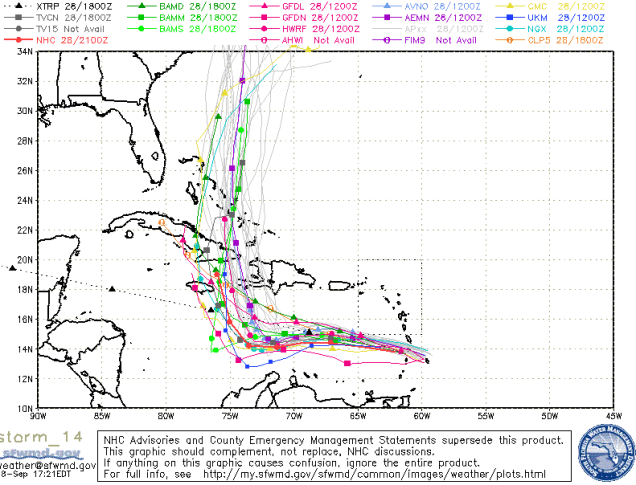
What is unusual is that the forecast track has the system making a hard right turn to the north sometime this weekend. Most of the models are in agreement to that forecast.

matthew2

However, the two main models, GFS and ECMWF, disagree on where it will track a week from now. An earlier run of the GFS had it going up Chesapeake Bay next Thursday. The ECMWF has it moving slower with a possible landfall in southern Florida, so this should be watched carefully in the coming days.

BloomSky Weather Station

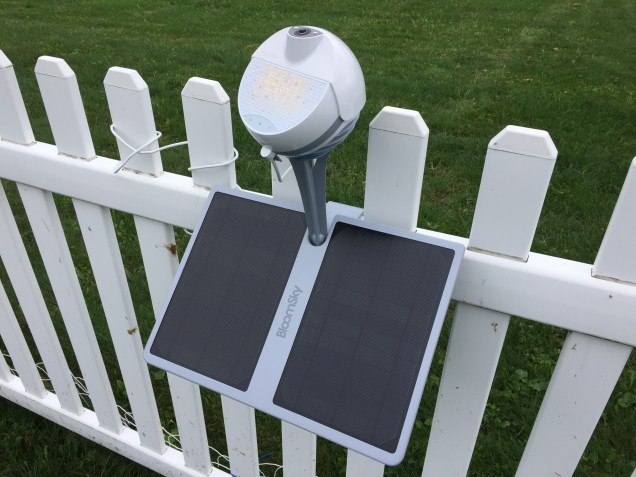
Over the weekend, I installed a BloomSky weather station at my home in Stormstown. The installation was simple. The only tool required was a Phillips screwdriver.

First, the mount was simply clamped to the backyard fence. Then a mounting plate for the solar panel was screwed onto the mount. The solar panel simply clipped to the plate. Before mounting the sensors, it had to be configured for the WiFi by using the iOS app. This was an easy process after plugging it in using the supplied AC adapter.

bloomsky

Lastly, the weather station itself only had to be dropped in place into the mount, and then plug in the solar panel. The only issue was the the air pressure didn’t report at first. This was resolved by unplugging the solar array and cycling the power from the internal battery. Then plug the solar array back in.

Data and camera imagery are located here:

https://www.wunderground.com/personal-weather-station/dashboard?ID=KPAPORTM15#history


Cloud Seeding Using Drones

While reading the latest issue of Weatherwise, I learned that The Desert Research Institute of Nevada has been conducting experiments using a drone for cloud seeding.

https://www.engadget.com/2016/05/04/cloud-seeding-drone-makes-first-flight-over-nevada/

This is surprising considering that many cloud seeding experimental programs were suspended following The Rapid City Flood in June 1972. Cloud seeding was being conducted nearby at the time.

http://www.weathermodification.org/publications/index.php/JWM/article/viewFile/166/212

Weather modification is a double edge sword and results have been dubious at best. In 1972, there were lawsuits against those that were conducting cloud seeding near Rapid City, even though there was little evidence that cloud seeding had augmented the rainfall that caused the flooding.

Penn State had also been conducting similar experiments in the seventies with their own aircraft. That program was also suspended. The plane that was being used for weather modification was refitted for air pollution studies.