Clearwater Conservancy Groundbreaking Ceremony

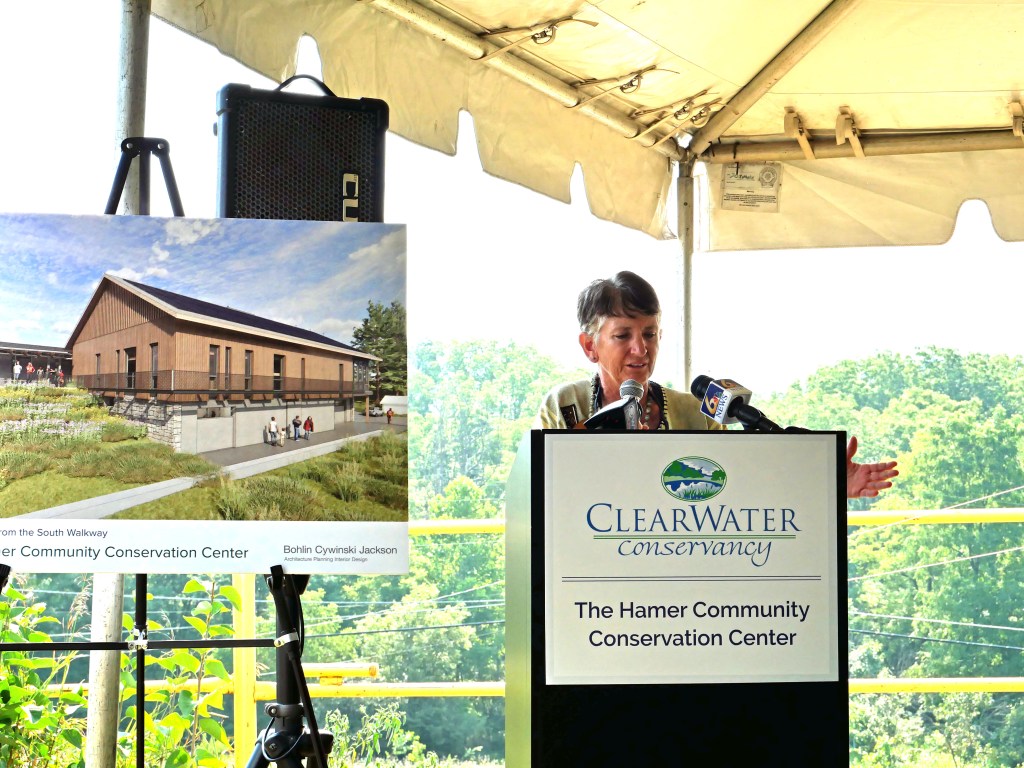
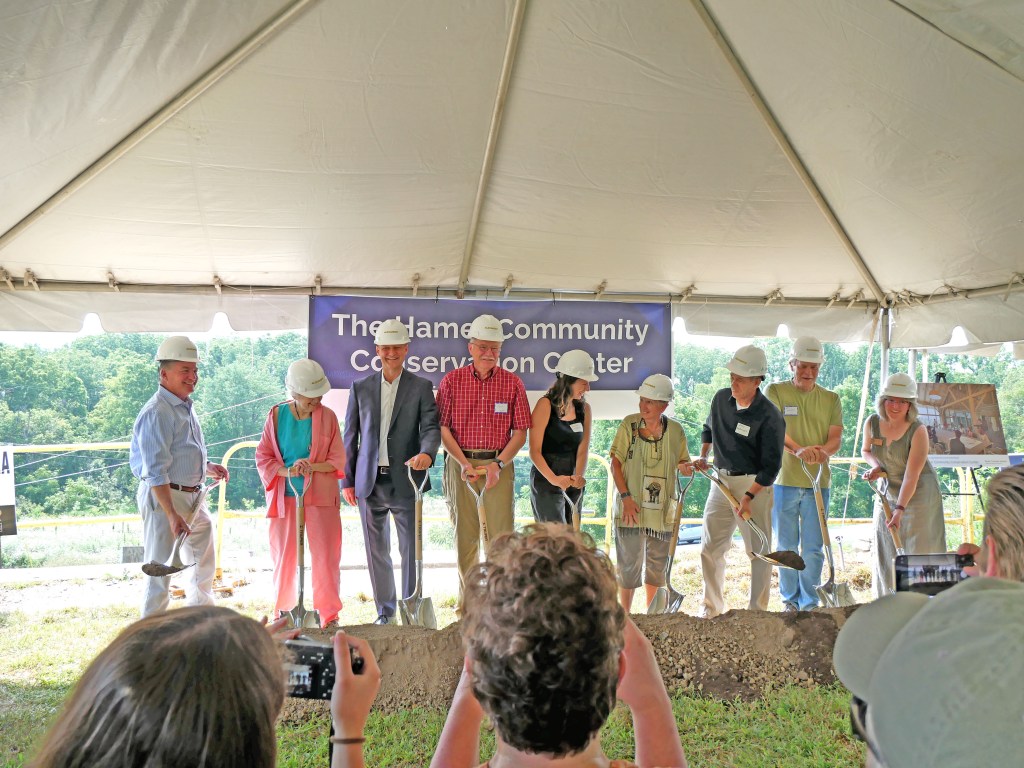
On August 5, 2025, Clearwater Conservancy held a groundbreaking ceremony for the construction of The Hamer Community Conservation Center.

The center is named after Donald Hamer (1925-2016), who cared deeply about the preservation of natural resources and generously donated his time and resources to environmental groups, including ClearWater Conservancy. Construction of the 10,392-square-foot, two-story center is scheduled for completion by mid-August 2026. The 10-acre construction site is located at 1601 Houserville Road in Houserville, PA.

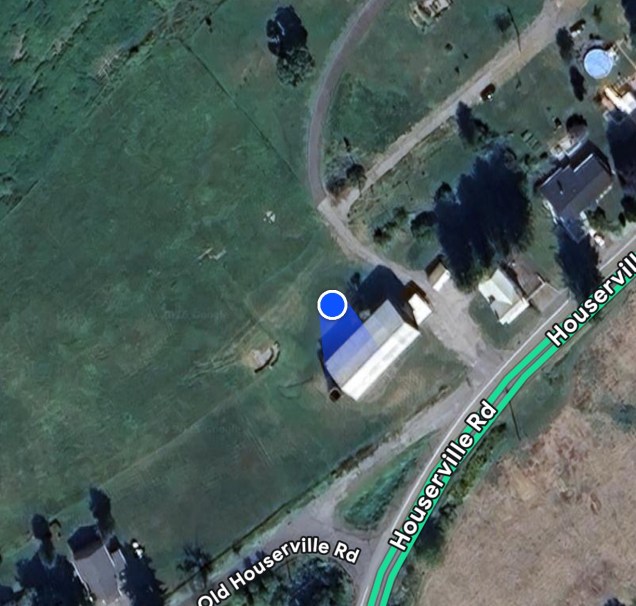
Construction Site
Barbara Fisher

Clearwater founder Barbara Fisher explained how the organization originated from citizen efforts to stop a mall from being developed on farmland in Ferguson Township, which set the stage for the Tudek family to purchase and donate the land that became Tom Tudek Memorial Park. 

Speakers also included:

Clearwater President Donnan Stoicovy
Clearwater Executive Director Elizabeth Crisfield
State Representative Kerry A. Benninghoff

Also present were Centre County PA Senior Environmental Corps (CCPaSEC) Members: President William Smith, Vice President Carolyn Hatley, and Equipment Manager David DeCapria.

WTAJ News Coverage

History of Port Matilda, PA

Located in the Bald Eagle Valley off of I-99, between Tyrone and State College, is the small town of Port Matilda. Today, the town has a post office, fire department, EMS, and a few small businesses. Also located in the town is The Port Matilda Hotel and Tavern, which boasts some of the best wings in the area.

Port Matilda traces its roots to 1850, when Squire Clement Beckwith formed the town plot. The naming of the town, however, is not as clear. Beckwith undoubtedly used “Matilda” after his daughter, but “Port” is the source of some debate. The most common explanation, cited by the Centre County Historical Society, claims that Beckwith hoped to eventually connect the town to the Bald Eagle and Spring Creek Branch of the Pennsylvania Canal, which unfortunately never came to pass. 

Beckwith, who had lived in Bellefonte for nearly 20 years prior, purchased 1,800 acres and set about building all the amenities necessary for a pioneer village, including several mills, houses and a worship space. John Blair Linn’s History of Centre and Clinton Counties, Pennsylvania mentions that before land was carved up among early settlers, the township—like most of the county—was home to “Cornplanter Indians,” but pressures from westward expansion and various treaties had seen the last move from the area around the turn of the 19th century. Thus, the town of Port Matilda was born, and its significance would grow. 

In 1852, a plank road was run from recently plotted Tyrone to industrial hub Bellefonte. Fortunately for Port Matilda, the old wooden roadway passed directly through the heart of town. In the latter half of the 1800s, Linn notes, in addition to the frequent traveler on horseback or wagon, four stagecoaches were run daily through the village on their way to or from Bellefonte, with one stopping overnight in Port Matilda. With so much traffic, the town’s amenities increased, and the town’s most famous landmark, the Port Matilda Hotel, was erected as the only hostelry for several miles in either direction.

The Port Matilda Hotel has its roots in the birth of the town, and has witnessed the growth, “golden years,” and eventual decline that plagued so many industrial towns. The town’s first tavern was built and managed by John Fugate Sr. to take advantage of the growing travel through Port Matilda. In addition to the old plank road, the Bald Eagle Valley eventually had railway lines that would increase travel and industry. The original hotel would pass hands several times until 1871, when it was burned to the ground by an incendiary. Eventually rebuilt, the hotel flourished through the turn of the 20th century managed by G.W. Woodring,

For many years, Port Matilda was a “boom” town, both figuratively and literally, as the largest industry in town was the McFeely Brick Company. Employees blasted away ganister rock from the face of Bald Eagle Mountain over many years; the rock was used to make a specific type of silica brick. Most people living in Port Matilda had a connection to the brickyard, which required a great labor force to produce, package and ship their products via rail from the site. At that time, in the 1930s and 1940s, the industrial economy of the town provided for theaters, parks, community swimming pools, stores and schools.

Like many industrial towns in central Pennsylvania, once the main industry leaves, the town struggles. McFeely Brick Company was sold in 1959, and the new owners promptly closed the Port Matilda brickyard. The booming stopped, but Port Matilda survived. Today, Port Matilda remains as a crossroads town. While I-99 has made it far too easy to cruise on past, Port Matilda is definitely worth passing through, grabbing a basket of wings and reminiscing on what small-town America looked like for our past generations.

Source: StateCollege.com

Port Matilda: From Plank Road to the brick company
EV Charging Etiquette

Along with the new electric vehicle (EV) technology there is also a developing etiquette at public charging stations. Most of the time, charging at a public station is an amicable experience. Owners will sometimes gather while charging, or waiting for an available charger, and talk about their cars or other topics. However, there are inconsiderate people that one may encounter from time-to-time.

Here are a few guidelines. Some are common sense, some I have learned from experience, and others I found from research:

– Always be courteous.

– Don’t ICE a charging space (block a charging space with an internal combustion engine vehicle), and don’t park your vehicle at a charging station unless you intend to use it.

– Read and follow what is on any posted sign.

– Don’t cut in line. Ask if there is a queue and follow the guidelines.

– Park at the correct connector. When you find a public charging station, make sure you park at the right type of plug-in point. For example, if your vehicle isn’t compatible with DC fast charging, then a Level 2 (240-volt) station is what you’ll need.

– Never unplug another person’s vehicle. Some connectors are locked while the vehicle is charging. If it isn’t yours, leave it alone.

– If you are leaving your vehicle, consider leaving a note to let others know when you will return. Otherwise, plan to return before the charging session is complete.

– When charging is complete, don’t leave your car connected for more than 10 minutes. Electrify America will start charging a penalty after 10 minutes. EvGo is limited to a 60 minute charging session.

– If the charging station is busy, consider ending your session at 80%. By design, the charging of most EVs slows dramatically once you’ve reached 80% of capacity. The limit protects the battery from the tremendous amount of damaging heat created as a fast-charged battery nears its capacity.

– Properly stow the connector when you’re done. Leave the charger the way you found it or better. Tangled cables and connectors on the ground may make it difficult for the next user.

– After charging is complete, move to a regular parking space if you still have other business at a location.

– If you don’t know what you’re doing, ask someone or call customer service.

– Help the charging station rookies.

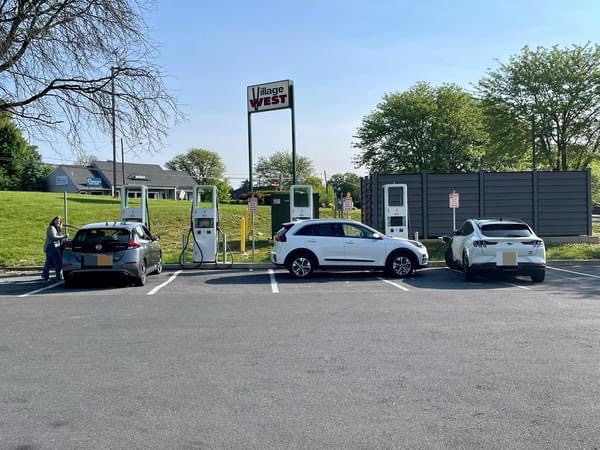
– Don’t be this person.

Jerk blocking two chargers.

September 2020 Weather Summary

September was 0.4 deg F below normal for temperature. The high for the month was 85.9 deg. F recorded on September 8. The low for the month was 32.0 deg F, recorded on September 20. There were 0 days at or above 90 deg F and 1 day at or below 32 deg F. There were 171 heating degree days and 88 cooling degree days.

The drought continued into September with below normal precipitation of 2.61 inches of rainfall recorded, which was 1.37 inches below normal. The maximum rainfall in a single day was 1.34 inches recorded on September 29. There were 5 days of rain >.01 in, 5 >.10 in and 1 > 1 in.

High wind speed of 24 mph on September 23.

September 2020 Data

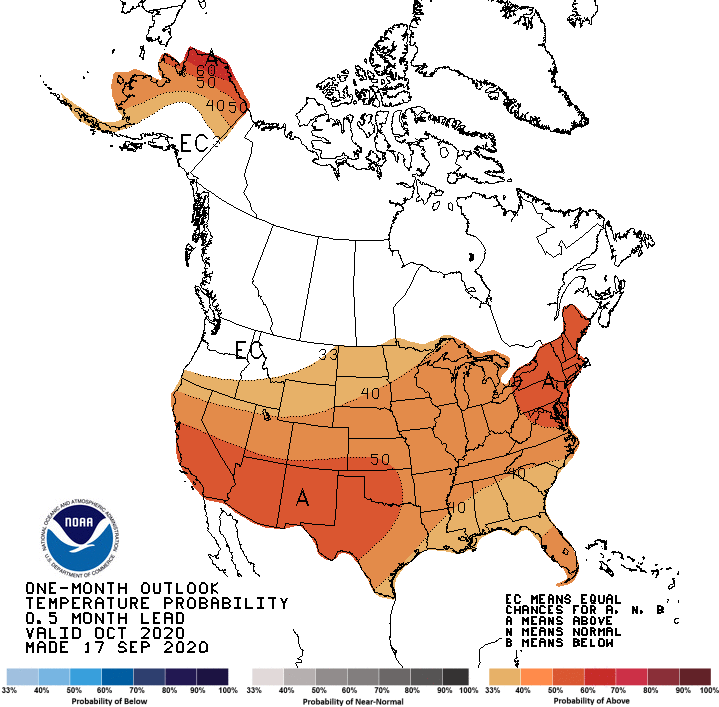
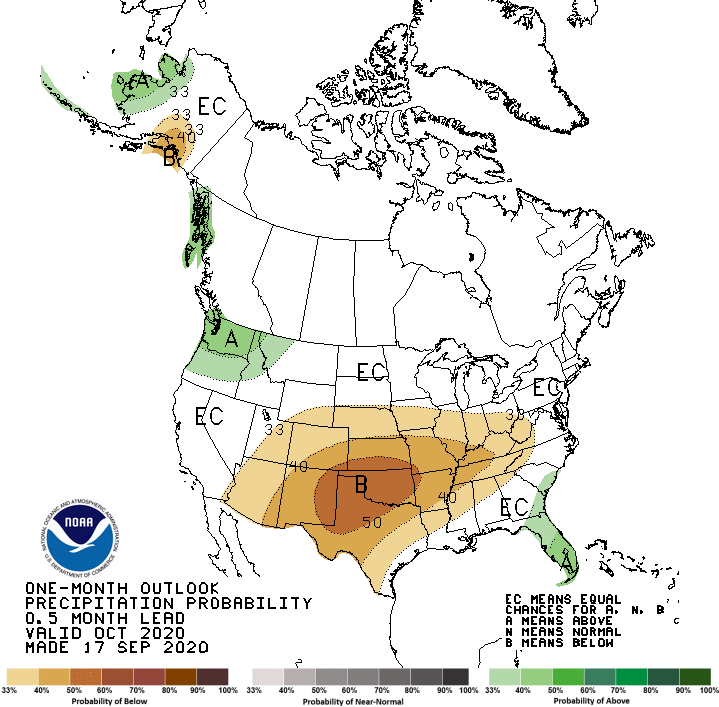
Outlook for October 2020

Drought Eases

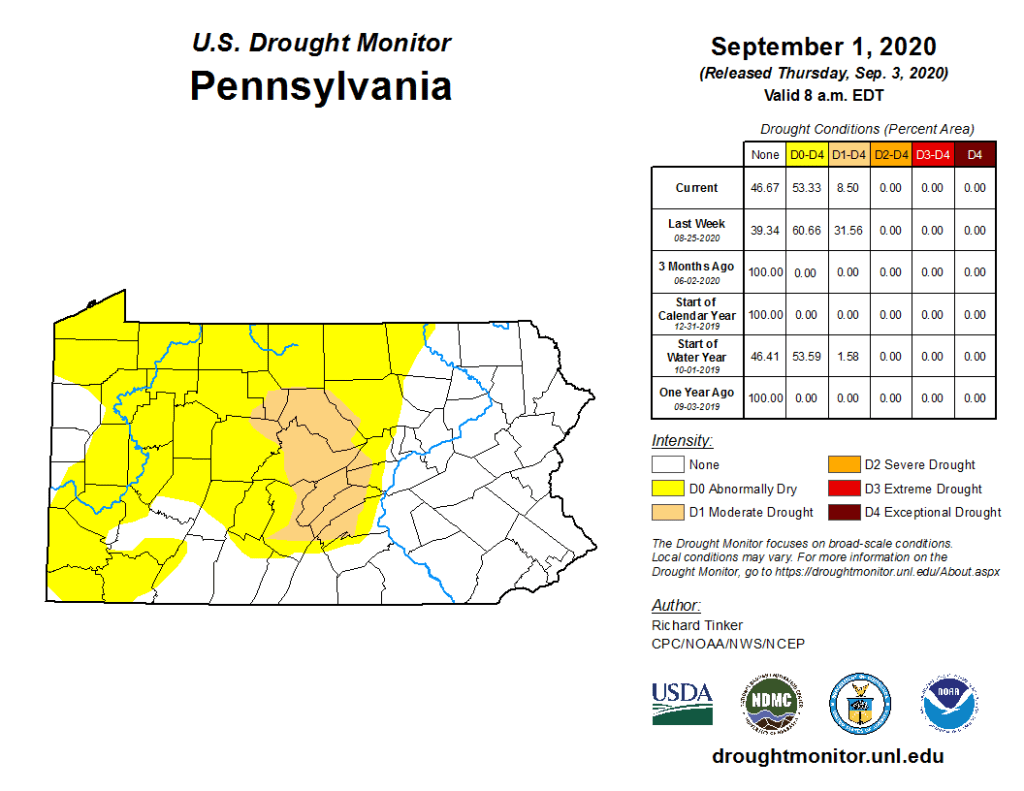
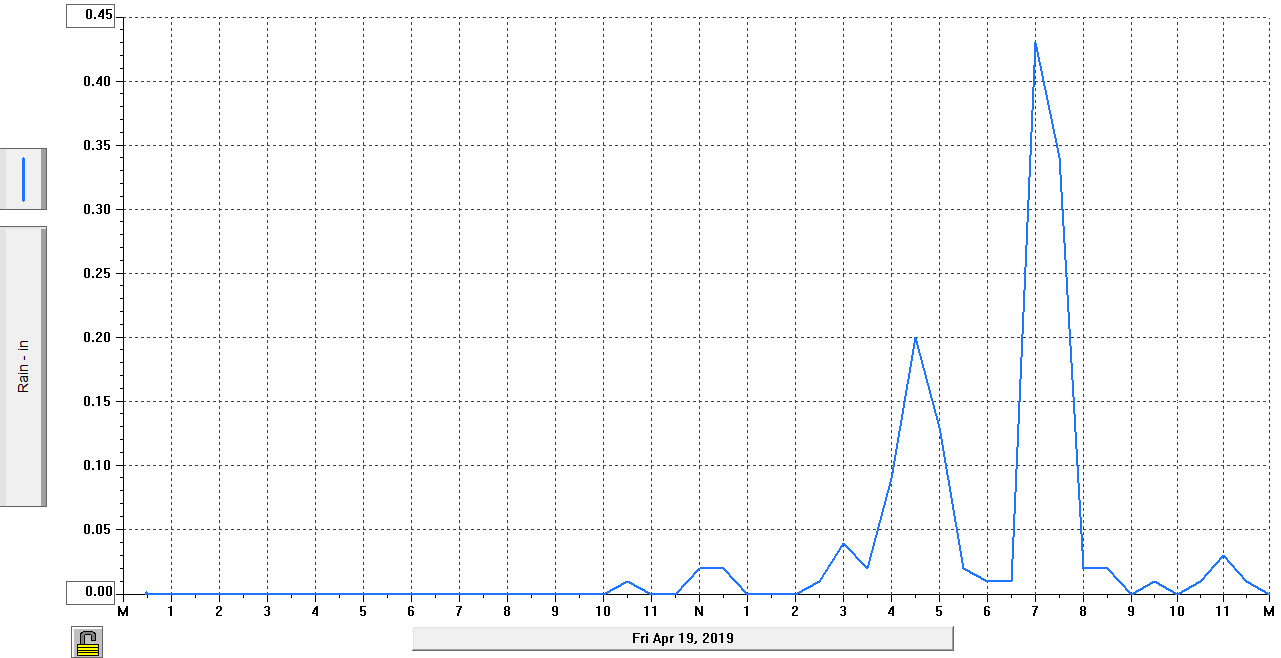
I have recorded 1.89 inches of rainfall since last Thursday. The drought isn’t over yet, but there are signs that it is improving.

Most of Centre County is still experiencing a moderate drought. However, our little corner of the county is now abnormally dry. The outlook for the rest of September indicates equal chances for normal rainfall (about 4 inches on average).

Ice Storm

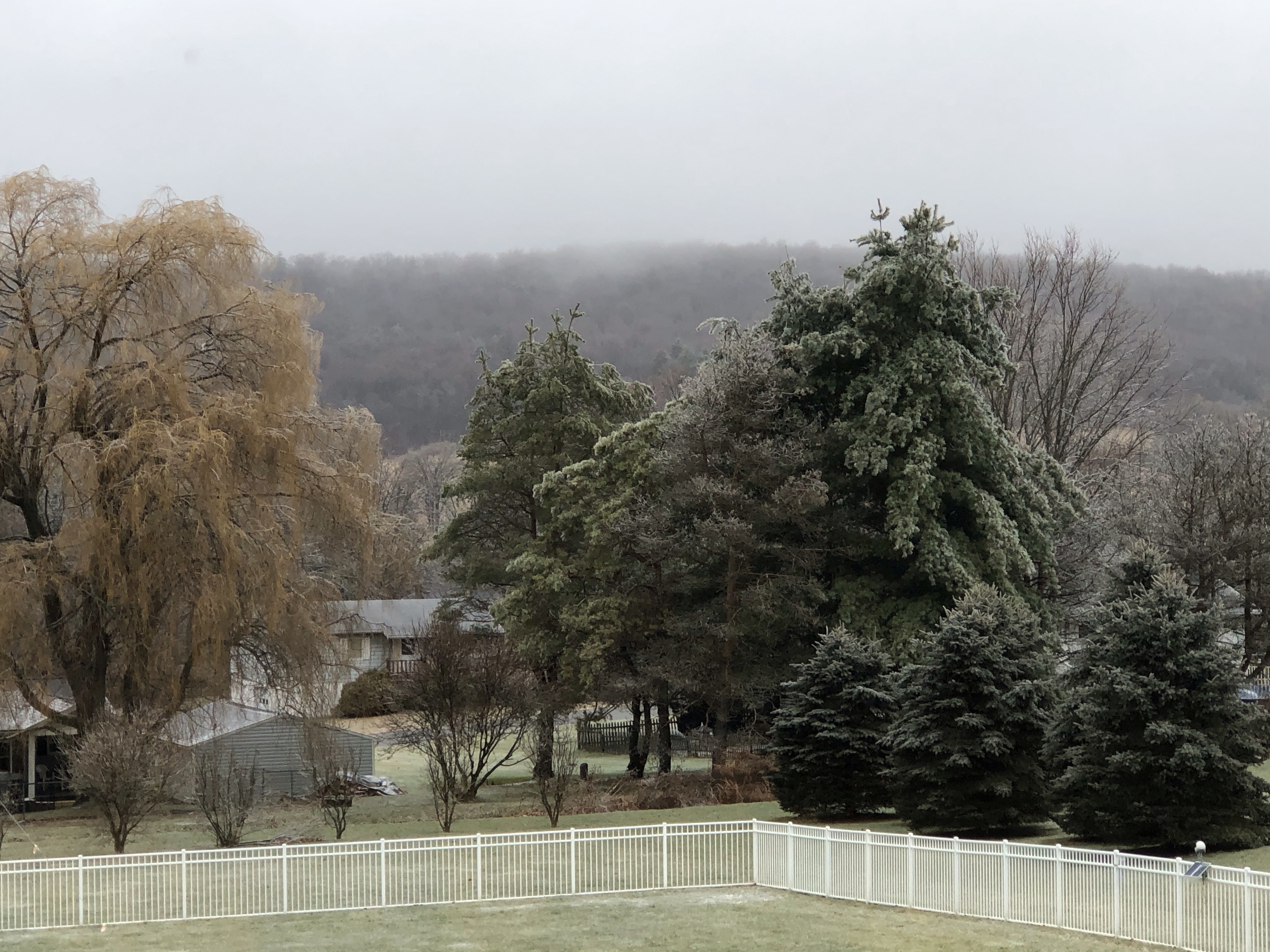
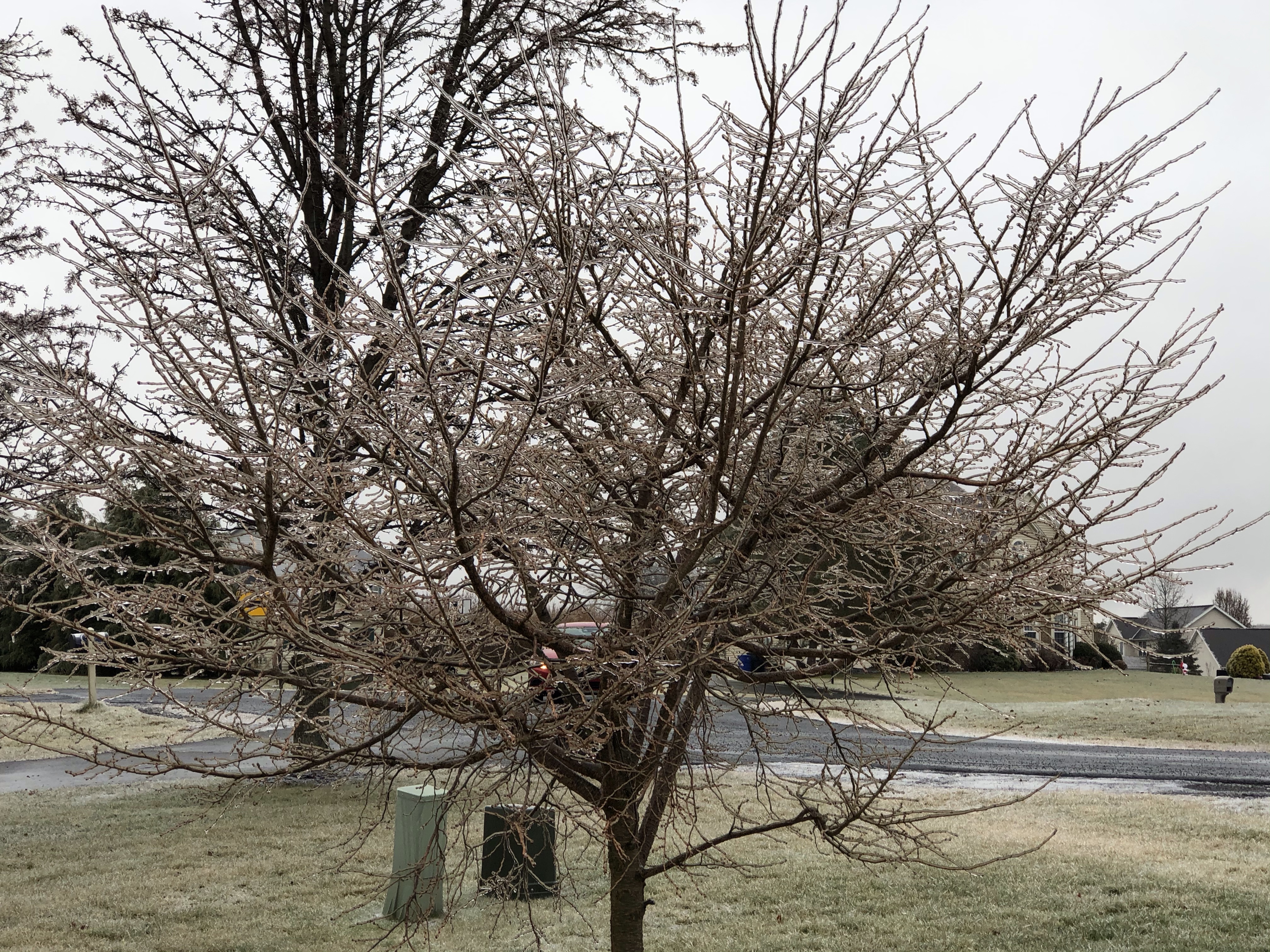
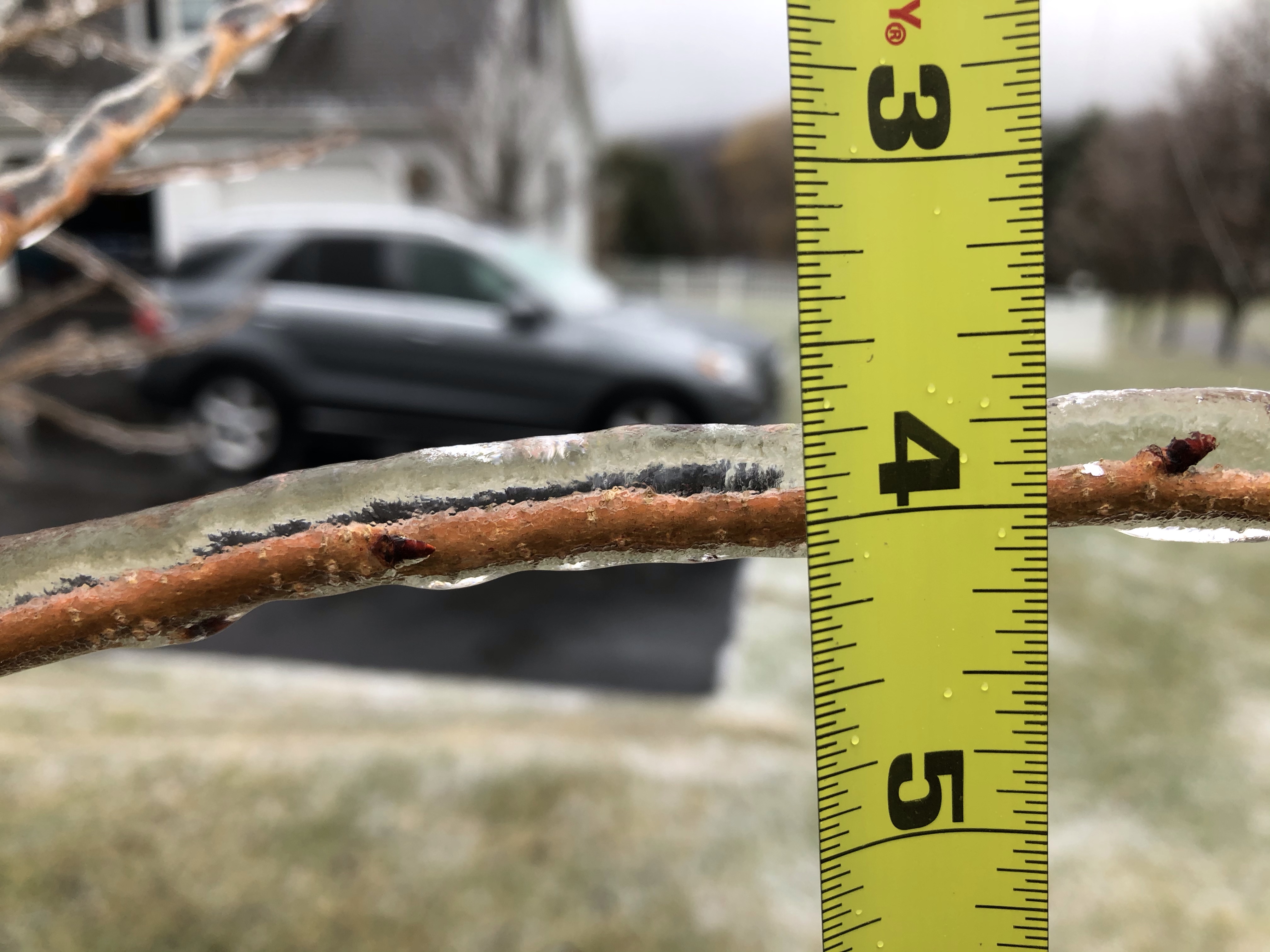
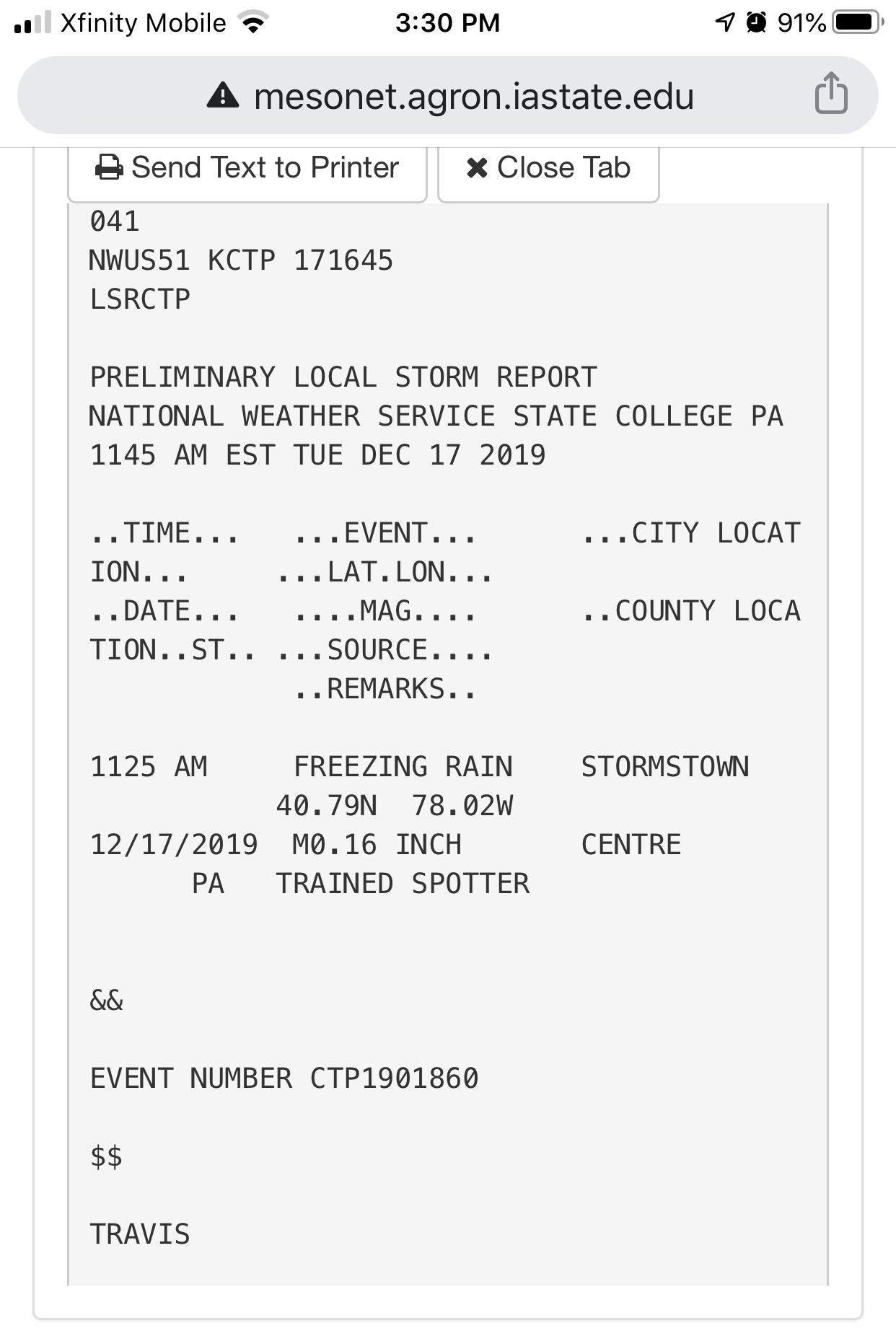
On Tuesday, December 17, our area experienced an ice storm. Freezing rain, supercooled rain droplets, froze on contact on many surfaces during the night.

About 0.16 inches of ice accretion was observed.

Also, snow squalls, on Wednesday, caused a pile up on I-80 that shut down the highway for 34 miles, in both directions, between the 178/220 North/Lock Haven exit in Clinton County and the 212B/I-180 West/Williamsport exit in Northumberland County.

Summary of Autumn 2019

Meteorological Autumn is officially over. Here is a brief summary of September 1-November 30 in Stormstown, PA:

Number of days Max T >= 90 F: 1
Number of Days Max T <= 32 F: 1
Number of Days Min T <= 32 F: 20
Max T: 90.0 F – September 11, 2019
Min T: 18.3 F – November 26, 2019
Sep Dep from Normal: 2.0 F
Oct Dep from Normal: 2.2 F
Nov Dep from Normal: -4.5 F
Heating Degree Days: 1318
Cooling Degree Days: 123
Sep Precip: 2.22″, 1.76″ below normal
Oct Precip: 5.42″, 2.08″ above normal
Nov Precip: 1.03″, 2.21″ below normal
The outlook for Winter 2019:

Paws and Hot Asphalt

During a recent walk with my dogs, I decided to take along my infrared thermometer.

During the summer, it is important to remember that the pads of a dogs paws are subjected to hot surfaces outside. Since there are no sidewalks where I live, our dogs walk on asphalt, gravel or grass.

I took a few measurements during a walk today. It was sunny around 2:45 PM EDT, and I found that the temperature of the asphalt can reach 140 F. It became increasingly cloudy during my walk so the asphalt cooled off a bit.

The gravel along the side of the road is preferable at 100 F. Grass in much better, even if it is dry and brown. I measured 85 F for dry grass. Green grass was cooler at 80 F. In the shade, the green grass measured 70 F. Even concrete in the shade was better than asphalt at 90 F.

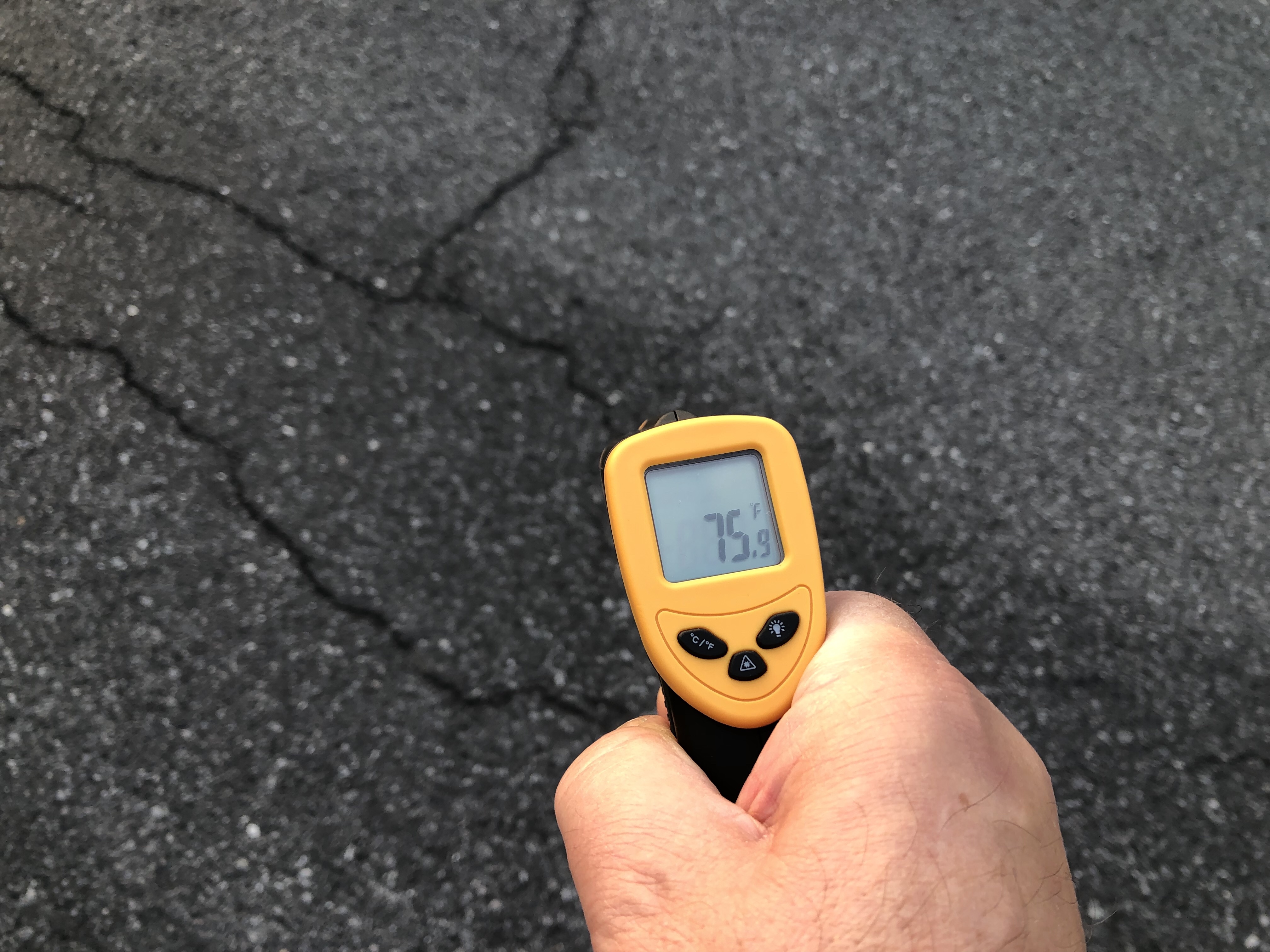
By contrast, at 7 AM EDT, the asphalt temperature was 76 F.

These readings show that asphalt can be harmful to your dog’s pads. Today the air temperature was in the low 80s. If it was above 90 F, it follows that asphalt can be greater than 140 F and could burn dog’s paws.

A simple check is to place your finger tips on the asphalt for a few seconds to see if it’s comfortable.