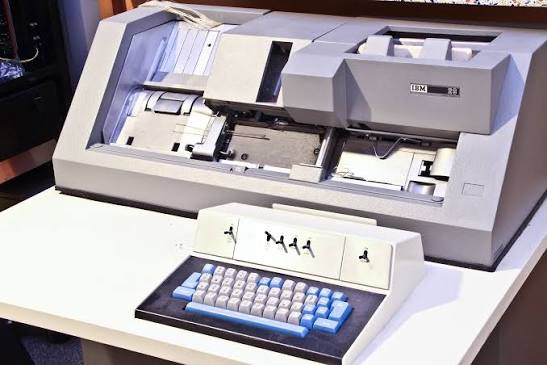
In 1975, I began my first class in computer programming. The programming language we used was ForTran (formula translation). We wrote our programs with IBM 029 keypunch machines.
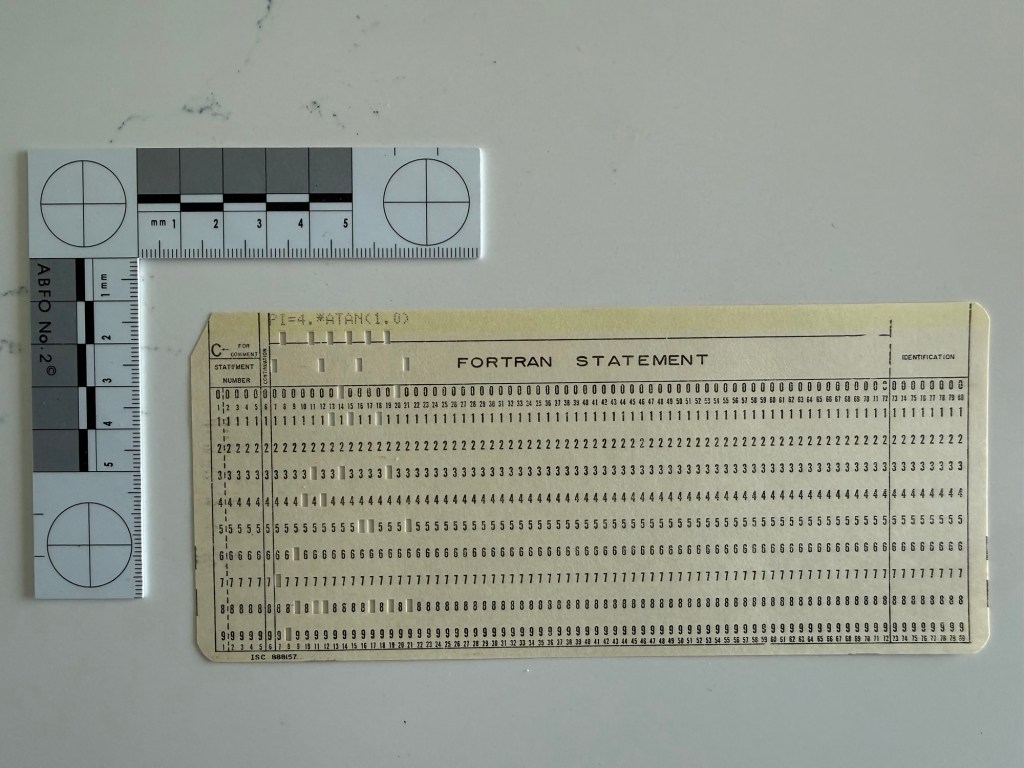
Code was punched on Hollerith cards. Up to 80 characters could be punched per card. The first 5 columns was for statement numbers. If a C was punched in the first column, what followed was a comment line. Column 6 was reserved for a continuation character for statements longer than could be punched on one card. Columns 7-72 was reserved for the ForTran statement. The last 8 columns were reserved for the card number.
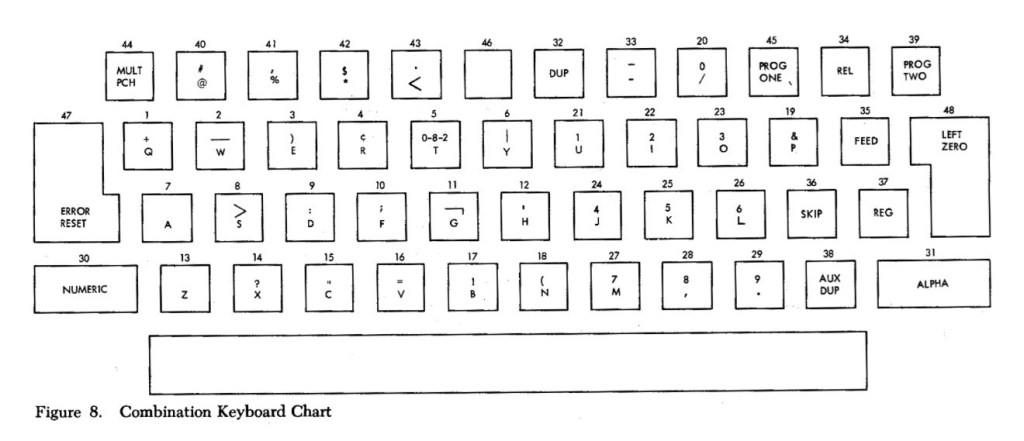
A stack of blank cards were placed in the right hopper. The AUTO FEED switch was set to ON, and then the FEED key was pressed twice twice to bring two cards down from the hopper. The first card was automatically registered to the punch station when the second card came down. A programming statement was then punched. The code was also printed at the top of the card. After punching a card, the REL key was pressed. The card moved to the output hopper on the left, the next card is registered at the punch station, and a new card comes down from the right hopper. When the last card was punched, the CLEAR switch was used to clear all the cards from the feed path and into the stacker.
Wise progammers would number their cards, using columns 73-80, in case a stack was accidentally dropped. Another trick was to use a marker to make a diagonal line acroos the stack from front to back. That made it easy to spot cards that were out of place in the stack.
The stack was then placed in a card reader for execution. A nearby printer would then print out the results. The program would be printed along with the program output. If successful, the execution output would be printed. Otherwise, there would be a printout of execution errors or compiling errors. The programmer would then punch replacement cards to fix the bugs and place them in the stack to try again.


*OH MY GOODNESS!! *I forgot all about the key punch cards. My dad worked at General Electric for years. He was fascinated by this “new” technology. My sister and I were thrilled when he brought home a couple of the cards. VERY futuristic!!
Thanks for sending this! Marcia 🤖
LikeLike