Before hard drives, flash drives, SD cards, and floppy disks, data was stored on magnetic tape. Typically, 9-track tapes were used on almost every kind of minicomputer and mainframe throughout the 1970s and 80s and well into the 1990s for backup, data archiving, and data interchange.
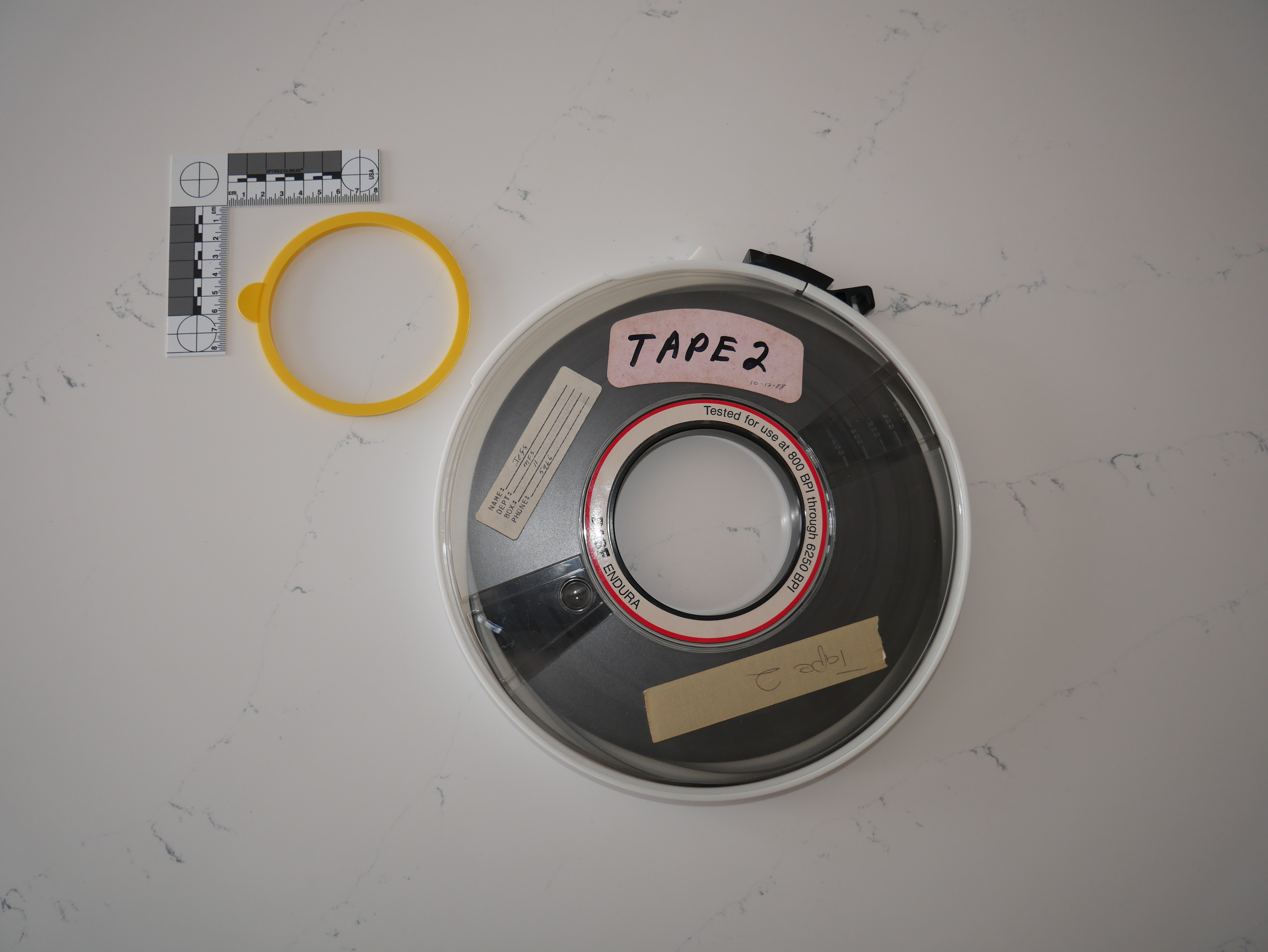
If the tape was mounted on the drive with a write ring, the user could write on the tape; otherwise, it was read-only. The operator would insert the ring according to the mount request unless the tape had a NO RING sticker.
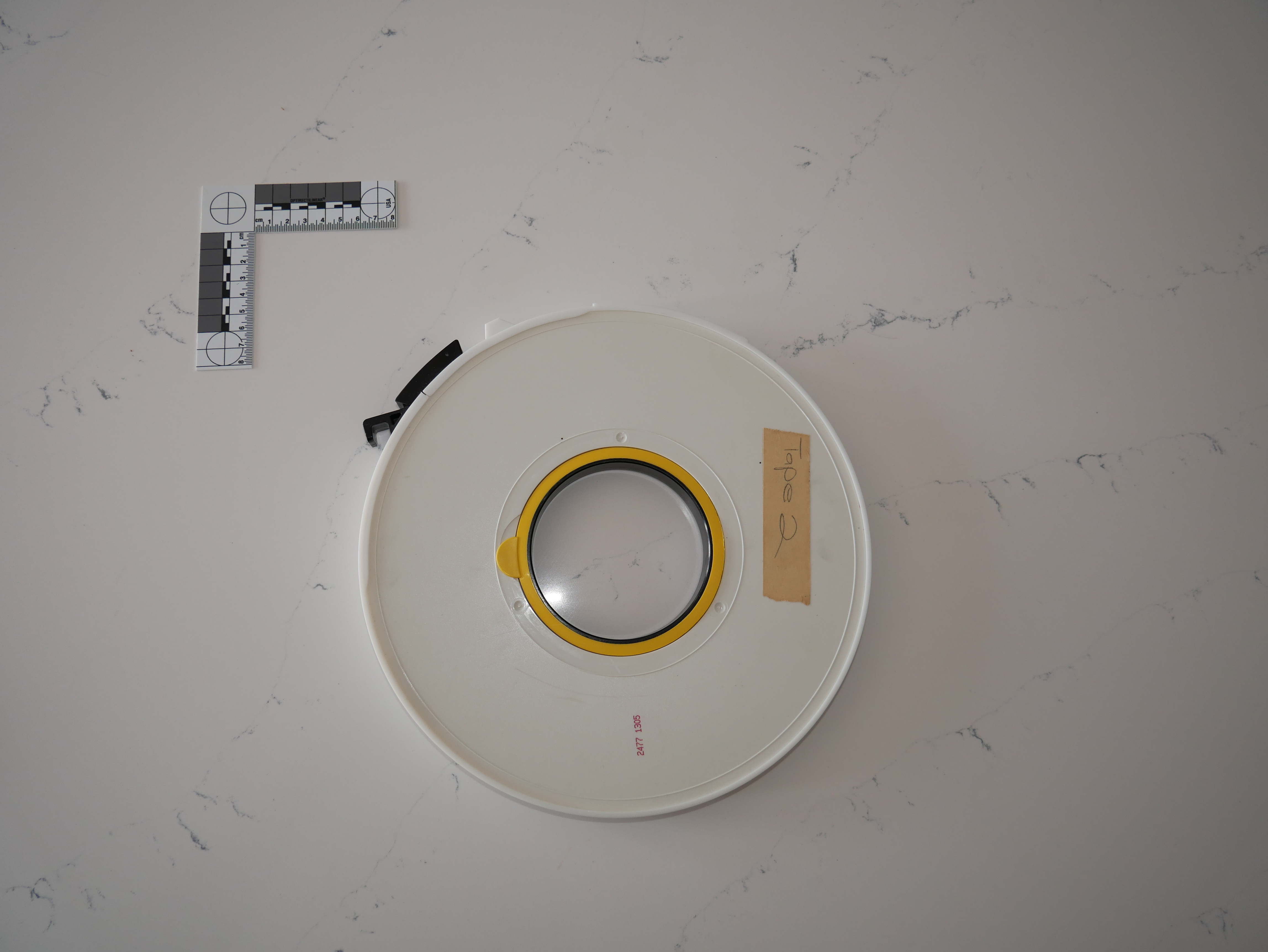
The 9-track tapes could be recorded in different densities: 800 bpi (bits per inch), 1600 bpi, and 6250 bpi; the higher the density, the newer the technology. 1600- and 6250-bpi tape drives could recognize lower densities (e.g., a 1600-bpi drive could read an 800-bpi tape). “9-track” refers to recording 8 data bits plus one parity bit across the tape (edge to edge). Thus 1600 bpi is the same as 1600 cpi (characters per inch). At 1600 bpi, a 2400-foot 9-track tape could hold about 50MB (depending on blocking, etc), or 170 MB for 6250 bpi density. Earlier, 4-track and 7-track drives operated at lower densities, such as 200 and 556 bpi.
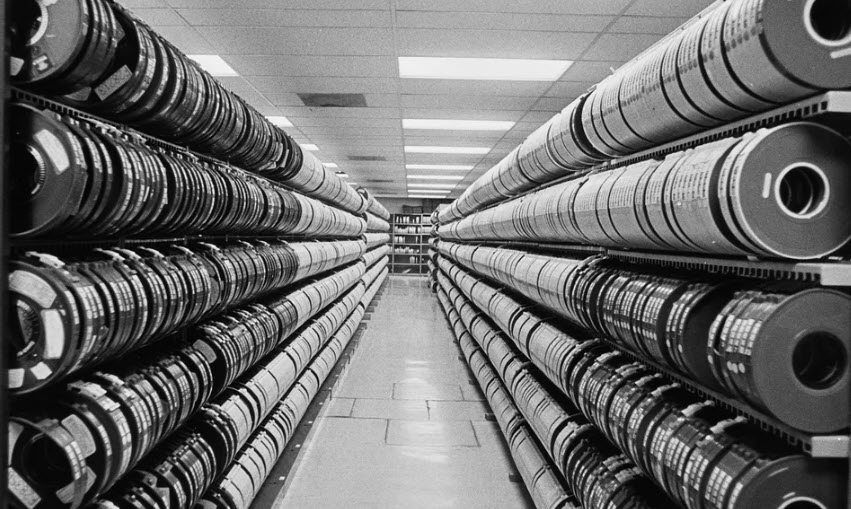
Each reel was labeled with a unique number, with the sticker visible on the front of the reel and on the protective tape seal cover on the outside. The reels were stored on racks, in numerical order, in a tape library. An operator would fetch the desired tape, mount it on a free drive, and then reply to the request, granting the user access.
In the 1990s, 9-track tapes gave way to more-compact, higher-density cartridge media: IBM (3850?) “square tapes”, DEC TK50 and TK70, QIC, 8mm and 4mm DAT, and so on, most of which were eventually rendered obsolete.